

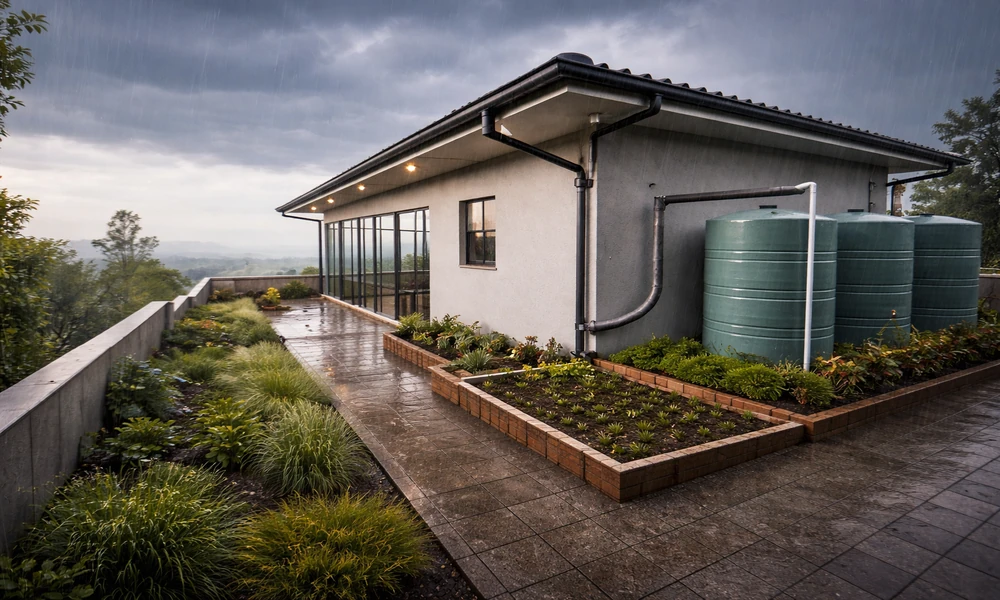
Most people think of gutters as a way to get water off the roof and out of sight. But that water is a resource, and with a few smart add-ons, your gutters can help you water the garden, protect the soil around your home, and reduce what leaves your property. If you are planning Elizabeth gutter installation, it is worth thinking about where the water will go before the first section goes up. This guide shows how a good gutter system can grow from a simple drainage setup into something that works harder for you.
Start with the Math: How Much Water Are We Talking About?
Roofs collect a surprising amount of water. A handy rule of thumb is that one inch of rain falling on one square foot of roof produces about six tenths of a gallon of water. That means a roof section of 1,000 square feet can shed roughly 600 gallons during a single one-inch storm. Spread across a whole house, the volume adds up quickly, which is why where your downspouts end matters so much.
Rung One: A Solid Foundation
Before adding anything fancy, make sure the basic system is sound.
- Gutters are sized for the roof area they serve
- Slopes direct water steadily toward the downspouts
- Downspouts are positioned so water leaves the roof quickly
- Seams, hangers, and end caps are secure
- Leaf guards or screens reduce clogging if trees are nearby
Everything else in this guide depends on the system working properly. A rain barrel hooked to a sagging gutter will only collect headaches.
Rung Two: Downspout Extensions and Splash Blocks
The simplest upgrade is to control where the water lands. A short extension or splash block moves water away from the foundation and spreads it out so it does not wash away soil. This is inexpensive, and it is a smart habit for every downspout on the house.
Rung Three: Rain Barrels
A rain barrel sits beneath a downspout and holds roof runoff for later. The EPA explains in its Soak Up the Rain guide to rain barrels that rain barrels capture water from a roof and hold it for later use on lawns, gardens, or indoor plants, and that collecting roof runoff this way reduces the amount of water that flows from your property. The same page calls it a great way to conserve water and notes that many cities and towns distribute rain barrels to residents through annual sales, with other sources including online retailers and local home and garden stores.
Things to plan for:
- Placement. Choose a downspout near the garden or yard areas you want to water.
- Support. A full barrel is heavy, so set it on a level, sturdy base such as concrete blocks or a platform.
- Overflow. Every barrel fills up. Include an overflow that sends extra water away from the house, ideally through a hose or pipe to a safe landing spot.
- Screening. A mesh cover keeps out leaves, debris, and mosquitoes.
- A spigot or hose connection. This makes the water easy to use.
A safety note on what you water: The EPA cautions that rainwater flowing over a roof can pick up pollutants such as bacteria from birds and other animals, along with chemicals from roofing materials. Those are factors to consider before using barrel water on edible plants. For ornamental beds, lawns, and shrubs, the concern is much smaller.
Rung Four: Cisterns for Bigger Capacity
If one barrel is not enough, a cistern is a larger storage tank. The EPA notes that cisterns are also used to harvest rainwater, and with a greater storage capacity they may be located above or below ground. Cisterns are a bigger project that usually involves planning for the tank location, overflow, and local rules. They make the most sense for large roofs, big gardens, or homeowners who want to store a meaningful amount of water.
Rung Five: Rain Gardens and Other Landing Zones
Not every drop needs to be stored. You can also route downspouts to places where water will soak in naturally, such as:
- A planted bed or garden border
- A shallow, planted depression designed to hold water briefly (a rain garden)
- A gravel-filled area that allows water to percolate
- A lawn area with enough slope and space to absorb it
The goal is to let water slowly sink into the ground instead of racing across pavement. These options usually need a bit of design and the right plants, so a landscaper can help if you want more than a simple splash block.
Choosing the Right Setup for Your Home
Ask yourself a few questions:
- How big is the roof section feeding each downspout? More roof means more water to handle.
- Where do I actually need water? Collecting it near the garden saves hauling.
- How much space do I have? Barrels and cisterns need room.
- What is the soil like? Slow-draining soil may need a different landing zone than sandy soil.
- Are there local rules or permits? Some areas have guidelines on stormwater, cisterns, or discharge. Ask before you build.
- What is my budget and maintenance tolerance? Simple options need little care. Larger systems need regular checks.
How to Plan Gutters with Collection in Mind
If you are installing new gutters, a few decisions at the start make collection easier later:
- Place downspouts near the areas where you might want a barrel or garden.
- Choose downspout sizes that handle your roof’s water volume.
- Ask the installer to leave room for a diverter, a removable section, or a barrel connection.
- Consider the discharge point for overflow before the system is built.
- Pick durable materials that work well with the roofing and siding on your home.
Seasonal Care for a Water-Collecting System
A little maintenance keeps everything working:
- Spring: Clean out gutters, check for damage from winter, and reconnect barrels.
- Summer: Inspect screens for mosquito protection, and check overflow paths during heavy rains.
- Fall: Clear leaves from the gutters, and clean the barrel inlet and screens.
- Before freezing weather: Drain and disconnect barrels so water does not freeze and crack them.
When to Call a Professional
Bring in a qualified gutter contractor if you notice:
- Gutters that overflow during moderate rain
- Sagging, pulling away, or leaking seams
- Standing water in the gutter after rain stops
- Water pooling at the base of the house
- A downspout that needs relocating or resizing
- Plans for a larger system that needs careful design
A pro can look at your roof size, gutter layout, and yard to suggest a setup that protects your home and puts the water to good use.
Final Thoughts
Your gutters already move thousands of gallons of water each year. With a few smart choices, that water can protect your foundation, nourish your landscape, and reduce what leaves your yard. Start with a solid system, add extensions, then decide whether a barrel, cistern, or rain garden fits your home. Little by little, your gutters can go from a simple roof accessory to a hardworking part of your property.
